

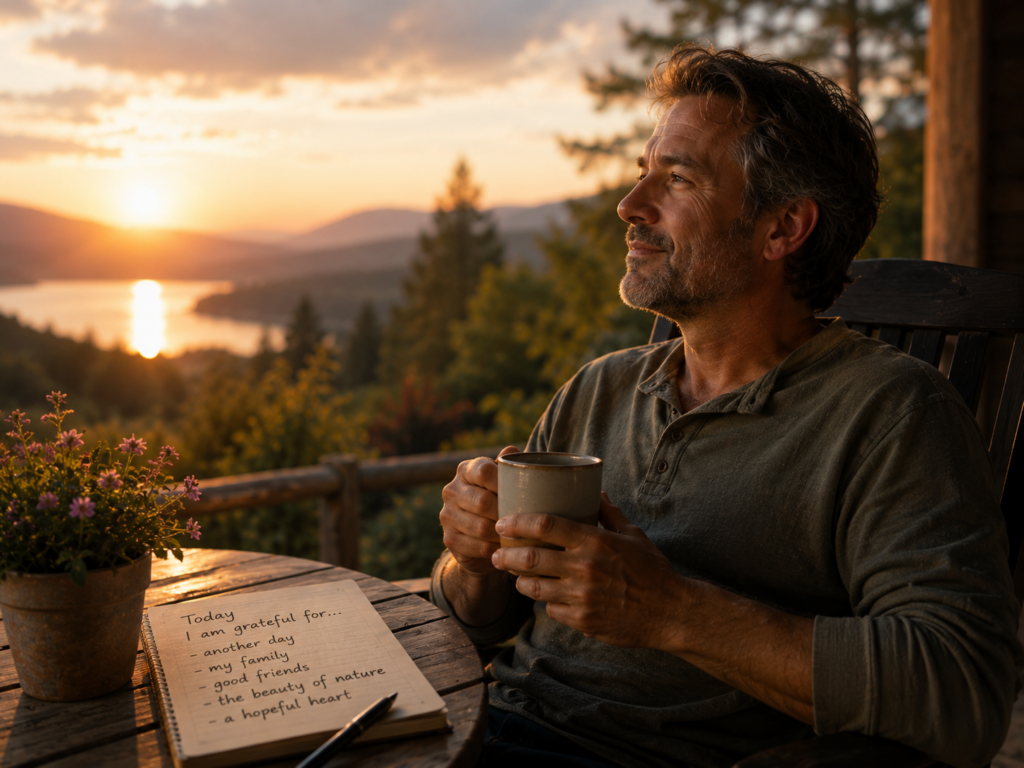
One of the greatest misconceptions about gratitude is that it asks us to ignore our suffering. My patients taught me exactly the opposite. I remember visiting a woman recovering from major surgery who had every reason to complain. She was in pain, her future was uncertain, and each day brought new challenges. Yet when I asked her how she was doing, she smiled and said, “I’m grateful I woke up this morning. I’m grateful my daughter was here to hold my hand. I’m grateful the birds outside my window haven’t stopped singing.” She wasn’t denying her illness. She was refusing to let it become the only story she could see. That conversation stayed with me because it reminded me that gratitude isn’t about pretending life is perfect. It’s about recognizing that even in the most difficult chapters, something beautiful often remains.
Over the years, I’ve come to believe that gratitude is one of the quietest forms of healing. Modern research suggests that grateful people often sleep better, experience less stress, and enjoy stronger emotional well-being, but long before those studies were published, I saw gratitude transform people from the inside out. When someone begins noticing moments of kindness instead of only disappointment, or beauty instead of only fear, something shifts. Their relationships deepen. Their outlook softens. Their hearts become more open to receiving love. Gratitude doesn’t erase pain, but it keeps pain from becoming our entire identity. It reminds us that we are still capable of wonder, even while carrying life’s burdens.
Perhaps that is why I have never thought of gratitude as simply saying “thank you.” Gratitude is really a way of paying attention. It is the willingness to notice the ordinary miracles that surround us every day—a friend’s unexpected phone call, the warmth of sunlight on our face, a child’s laughter, the comfort of a familiar hand, or the simple privilege of taking another breath. The people who have inspired me most were not those who lived the easiest lives. They were the ones who never lost their ability to be grateful for the gift of being alive. I’ve often said that love is the most powerful medicine, and gratitude may be one of the ways we learn to recognize that love has been with us all along.
Leave a Reply