

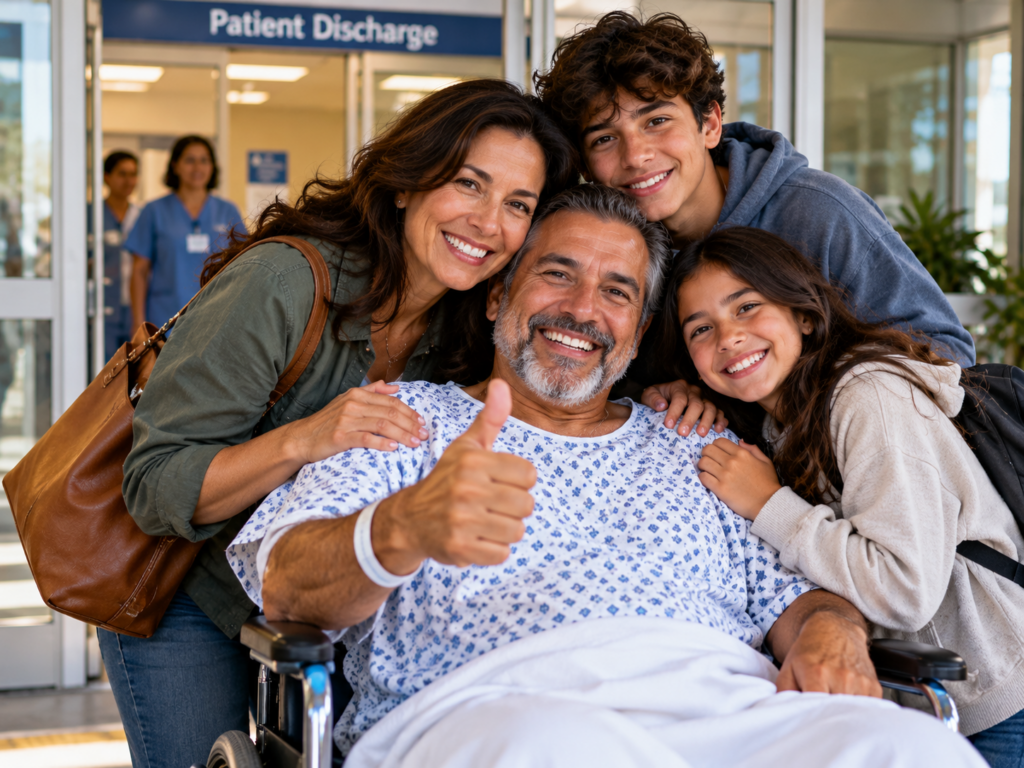
One of the most humbling lessons I learned as a surgeon came from patients who refused to fit neatly into the predictions we made about their futures. I remember sitting with people whose diagnoses suggested that their time was limited, explaining what the medical literature told us and trying to be both honest and compassionate, only to discover months or years later that some of them were still living lives filled with meaning, laughter, and unexpected possibilities. I often thought about a patient who, after hearing a discouraging prognosis, told me that he understood what the statistics said but still had grandchildren to watch grow up, a garden to tend, and a wife he intended to keep taking dancing. He wasn’t rejecting medical care or pretending his illness wasn’t serious; he simply refused to allow a prediction to become the entire story of his life. Patients like him taught me that while statistics are invaluable in guiding medical decisions, they describe what happens to groups of people, not precisely what will happen to the individual sitting across from us. Sometimes the most important thing a physician can say is, “I can tell you what we know, but I cannot tell you everything that is possible.”
Today, researchers are studying why people with seemingly similar diagnoses sometimes experience remarkably different outcomes, and the answers are revealing just how complex and individual human biology can be. Differences in genetics, immune responses, tumor characteristics, treatment sensitivity, overall health, and countless other factors can influence recovery, while researchers are also exploring how stress, sleep, relationships, expectations, and behavior interact with the body’s regulatory systems. Occasionally, medicine encounters an exceptional response or even a spontaneous regression of disease that challenges our understanding, although such events are rare and should never be presented as something patients can reliably produce through attitude or determination. I have always been fascinated by these medical surprises because they remind us that science is a process of discovery rather than a collection of final answers. We should study exceptional recoveries carefully, not because they prove that the mind can cure any disease, but because they may reveal biological mechanisms we have not yet fully understood and help us develop better treatments for everyone.
Perhaps the greatest lesson these patients taught me was that hope and uncertainty can live together, and that a person does not have to deny the seriousness of an illness to remain open to life’s possibilities. I have known patients who lived much longer than expected and others who did everything they could to support their healing yet died despite their courage, love, and determination, and I would never suggest that one group possessed some special spiritual quality the other lacked. Healing is not a competition, and survival is not a measure of personal worth. What we can learn from those who surprise us is that the human story is always more complicated than a medical chart, and that physicians and patients alike benefit from combining excellent medical care with curiosity, compassion, and the willingness to acknowledge what we do not yet know. When I think about the patients who defied the odds, I am reminded that a prognosis is an informed prediction, not a personal destiny, and that while we cannot promise miracles, we should never lose our capacity to be surprised by life.
Leave a Reply