

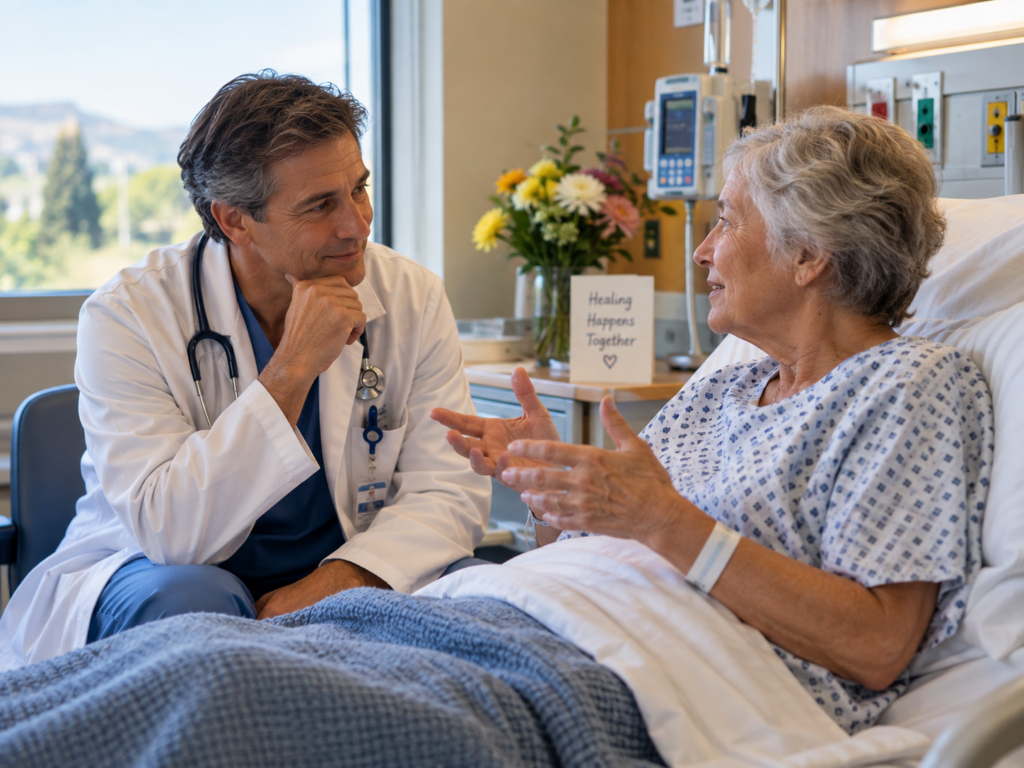
When I began practicing surgery, medicine taught me to look outward for the answers: examine the patient, identify the disease, order the appropriate tests, and then use surgery, medication, or another treatment to correct what had gone wrong. I remain enormously grateful for everything modern medicine can do, because I have watched operations, drugs, technology, and skilled physicians give people years of life they might never otherwise have had. But my patients gradually taught me that another physician was present in the room as well. It was the intelligence within the patient that closed an incision after I had finished operating, rebuilt tissue I could never manufacture, mobilized immune defenses, adapted to injury, and somehow kept working night and day without receiving instructions from me. I could perform the surgery, but I could not command the wound to heal, and that realization taught me humility: medicine can create extraordinary opportunities for healing, but the body must ultimately participate in the work.
I believe the future of medicine will become more humane when we stop thinking of the patient as merely the place where treatment is delivered and begin seeing the patient as a partner in the healing process. We are learning more about how sleep, movement, nutrition, stress, relationships, expectations, and a sense of meaning interact with health, while the science of the nervous system, immune function, and gene regulation continues to reveal just how interconnected human biology really is. None of this means that love replaces chemotherapy, meditation replaces surgery, or a positive attitude guarantees recovery, and I would never ask a frightened patient to carry that burden. It means something both simpler and more profound: while physicians treat the disease with the best science available, we can also help people create conditions that support their whole being by asking what gives them hope, who loves them, what makes them feel safe, what gets them out of bed in the morning, and what they still want to do with their lives. Those questions belong in medicine because the person answering them is the same person whose body we are trying to help.
If I could speak to the young surgeon I once was, I would tell him not to give up his instruments, his science, or his skepticism, but I would ask him to pull up a chair more often and listen to the person wearing the hospital gown. The medicine of tomorrow does not have to choose between technology and humanity, or between the physician’s knowledge and the patient’s inner resources; its greatest promise may lie in bringing them together. Doctors can diagnose, operate, prescribe, guide, and sometimes cure, while patients can bring their courage, relationships, imagination, purpose, choices, and desire to live into the partnership, and neither contribution diminishes the other. Perhaps the future of healing begins when physician and patient stop standing on opposite sides of the disease and stand together instead, each respecting what the other brings to the journey.