

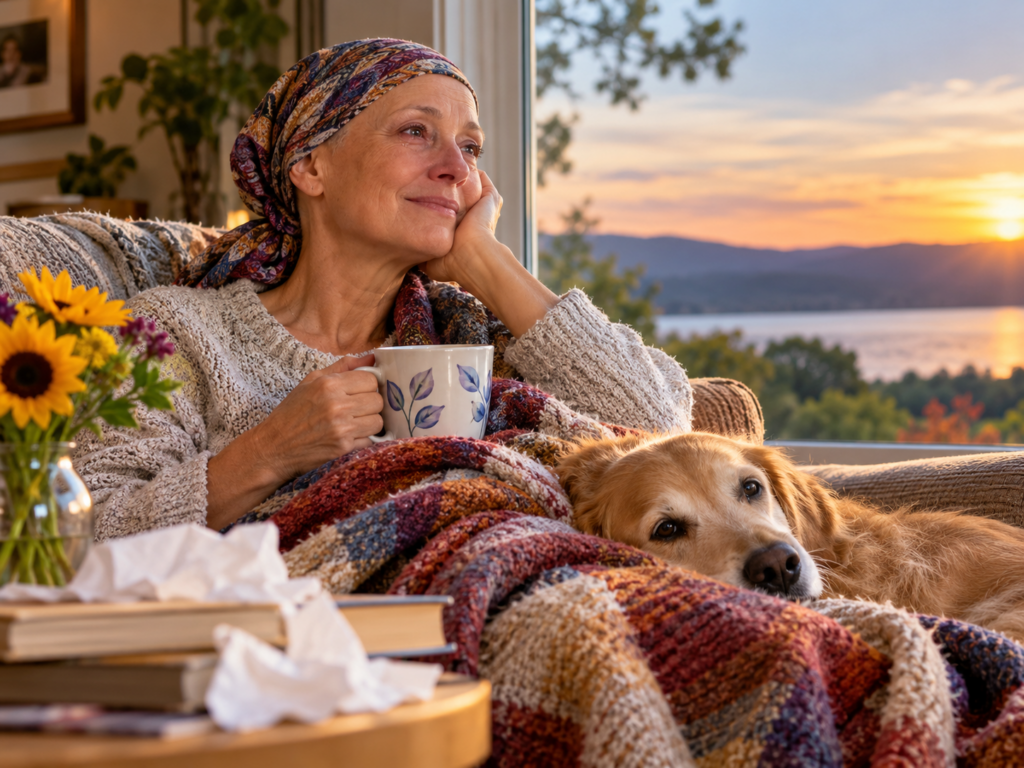
When someone is diagnosed with a serious illness, one of the first things friends and family often say is, “You have to stay positive.” I understand why people say this, because they love us, they are frightened for us, and they want to believe that a cheerful attitude will help everything turn out well. But I have always believed that healing begins with love, and love does not ask us to pretend we are happy when we are frightened, angry, exhausted, or simply having a miserable day. During my years as a surgeon, I came to understand how much courage it takes for people to face an uncertain future, and I also learned that courage doesn’t always look like a smiling face. Sometimes it looks like tears, sometimes it sounds like anger, and sometimes it is simply the willingness to get out of bed and face another day when you would rather pull the covers over your head. We are human beings, not greeting cards, and expecting ourselves to be cheerful every moment only adds another burden to an already difficult experience. If you are living with illness, you have enough to deal with without worrying that a bad mood might somehow make you a bad patient. Your feelings are not evidence of failure, and sadness or fear does not mean you have abandoned hope.
I remember a woman who wrote to me after her cancer returned, twenty years after her first diagnosis. During her earlier illness, she had felt remarkably strong and positive, even encouraging other patients, but this time she was frightened by the treatments ahead and troubled because she could not seem to recover the attitude she had once possessed. What strikes me about her experience is how easily we can turn something intended to help us into another expectation we must struggle to meet. Instead of asking what we need, we begin judging ourselves for not feeling the way we think we should. I have always encouraged people to participate in their healing, to love themselves, to find meaning in their lives, and to recognize that they are more than their diagnosis, but participation is not the same as controlling every thought or emotion. Fear may be asking us to seek reassurance, anger may be telling us that something important needs attention, and sadness may simply be the natural response to losing a life we once took for granted. We do not have to invite these feelings to move in permanently and redecorate the house, but neither do we have to throw them out the moment they appear. Sometimes the most loving thing we can do is acknowledge what we are feeling and share it with someone who will listen without trying to fix us. That kind of honesty can create room for companionship, understanding, and a little peace, even when the circumstances themselves remain difficult.
What I hope people will discover is that being hopeful and being positive are not quite the same thing. Positivity can become a demand that we look on the bright side, while hope can be a quieter companion, one that sits beside us when we are afraid and reminds us that life still contains possibilities we cannot yet see. You can cry in the morning and laugh with a friend in the afternoon, worry about tomorrow and still enjoy the warmth of the sun today, or feel angry about what has happened to your body while continuing to care for it with tenderness. None of these contradictions makes you less capable of experiencing love, meaning, or moments of healing. Of course, these are reflections about living with illness, not clinical instructions, and your own doctor is the person to consult about medical concerns and treatment decisions. What I mean by self-induced healing is not that our thoughts can command disease to disappear, but that we can participate in the quality and meaning of our lives, even when we cannot determine the medical outcome. So if today is a difficult day, please don’t add guilt to your suffering by insisting that you should feel differently. Allow yourself to be human, ask for the comfort you need, and remember that you are worthy of love on your worst days just as surely as on your best ones. You do not have to smile your way through illness to deserve healing, and you do not have to be positive every moment to remain open to the goodness that life may still offer.
Leave a Reply