

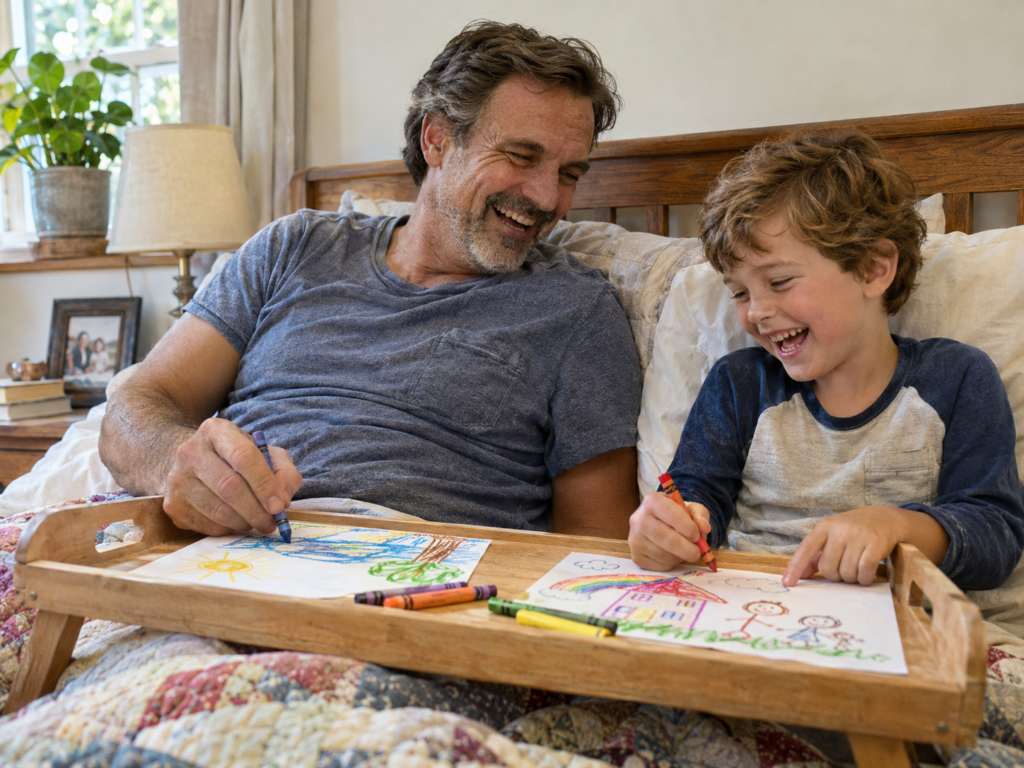
There is something inviting about a table with a few crayons on it, at least until the grown-up in us begins worrying about whether we can draw. Children generally get started while the rest of us are still explaining why we have no talent. In my work with patients, drawing became one way to welcome feelings and experiences into a conversation, and I explored that work in The Art of Healing. A picture gives us something to look at together, and the person who made it can tell us what matters about it.
I would bring that same curiosity to a pot of soup, a few lines written in a notebook, or a piece of wood someone is shaping into a birdhouse. When illness has filled the day with instructions, appointments, and waiting, choosing a color or deciding what to make for lunch can feel surprisingly personal. For a little while, you have something in front of you that you can influence, enjoy, and perhaps share with someone you love.
You might begin by remembering what you liked making before you started judging the results. Perhaps you enjoyed arranging flowers, taking photographs, sewing, or inventing stories that became increasingly improbable as you told them. If your energy or abilities have changed, you can look for a way to make the activity comfortable today, whether that means decorating one card, mixing herbs into a favorite dish, or asking a friend to help set out your supplies.
Imagine painting a bowl of oranges and discovering that one of them looks more like a potato. You can leave it there, give it a few leaves, or decide you have painted a very interesting potato. That freedom can be a pleasure when so much of life feels consequential. You may also discover feelings as you work, including sadness about something you used to do easily, and I would give those feelings some room. A few words on the page or a small piece of clay shaped in your hands can be enough for one afternoon.
I also like the possibility that making something can bring another person closer. A grandchild can sit beside you and draw, a friend can show you a knitting stitch, or someone can read the memory you have written about your first home. There is room for conversation, quiet companionship, and the satisfaction of seeing what the two of you have done.
I offer these reflections as encouragement for emotional and spiritual well-being, and I encourage you to consult your own doctor about your medical care and any activity limits you need to consider. You can approach creativity with the energy you have, including the freedom to stop halfway through and return another day. If something catches your interest, put a few supplies within reach and see what happens. Perhaps you will finish with a card for a friend, perhaps with paint on your sleeve, and perhaps with the pleasure of having spent a little time doing something you wanted to do.
Leave a Reply